
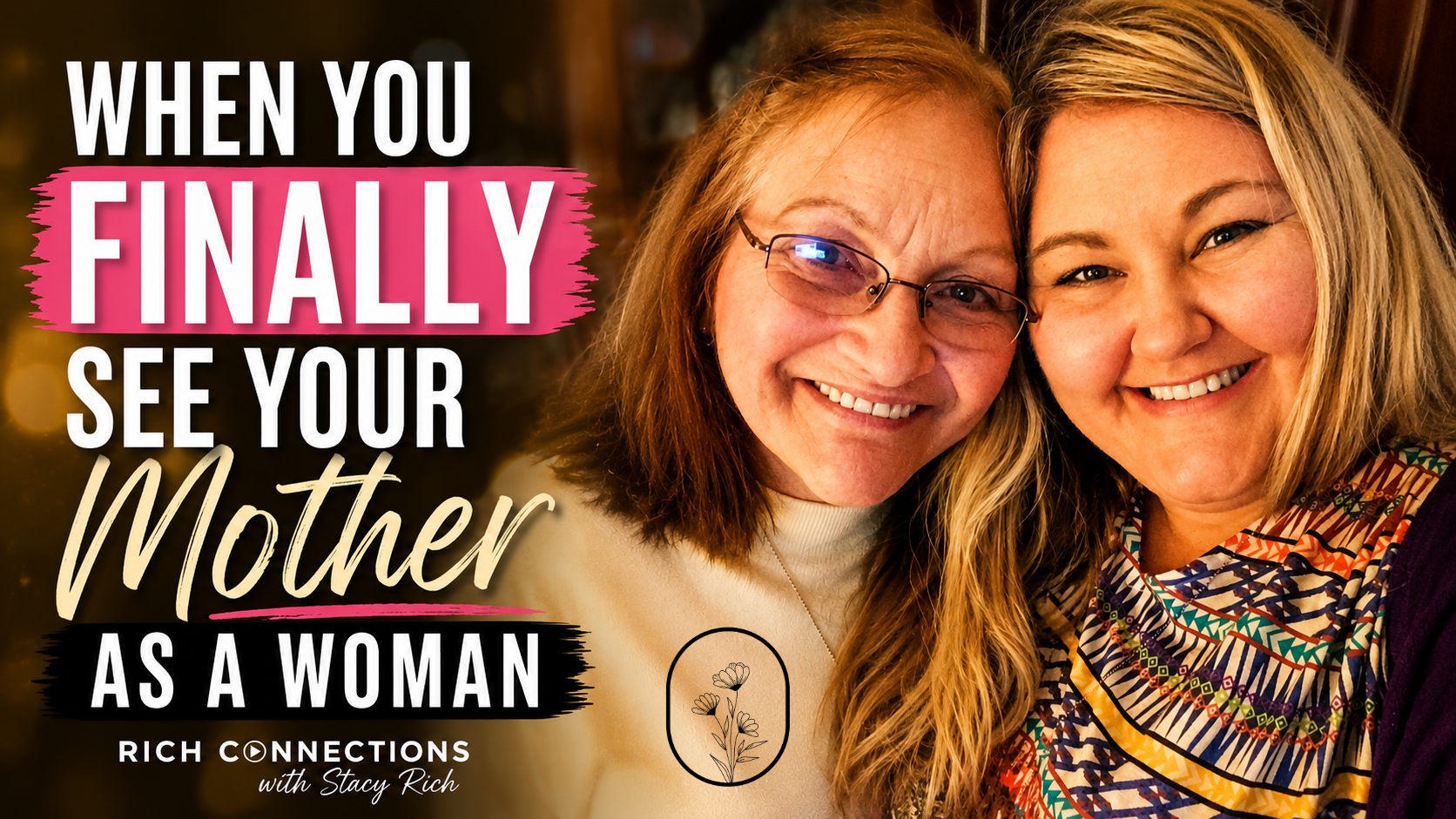

Grief, Emotional Maturity, Generational Healing & Seeing Our Parents Differently
There comes a moment in adulthood when you stop seeing your mother only as “Mom” and start seeing her as a woman.
A woman who existed long before motherhood.
A woman with dreams, insecurities, pressure, fears, creativity, disappointments, emotional wounds, responsibilities, and hopes that may have never fully had room to breathe.
That realization can crack your heart wide open.
In this deeply personal episode of Rich Connections, Stacy Rich reflects on grief, emotional maturity, motherhood, depression, generational trauma, compassion fatigue, and what it means to finally understand your parent through a completely different lens.
With Mother’s Day approaching and the 10-year anniversary of her mother’s passing arriving at the same time, Stacy shares an honest conversation about love, regret, healing, forgiveness, and the invisible emotional labor women carry every day.
Mothers Are Human Beings Before They Become Mothers
One of the biggest emotional shifts that happens as we grow older is realizing our parents were entire people before they ever became our parents.
We often grow up seeing them only through the lens of:

- what they did right
- what they did wrong
- how they showed up for us
- what we needed from them
But adulthood creates perspective.
You begin noticing:
- the pressure they carried
- the emotional wounds they never healed
- the responsibilities they silently managed
- the survival patterns they inherited themselves
And sometimes, that understanding changes everything.
Stacy shares memories of her mom being deeply creative, artistic, funny, expressive, and loving. She dreamed of becoming a cartoonist, loved making people laugh, and constantly created thoughtful experiences for the people around her. Then finally see your mother as a woman.
But somewhere between motherhood, work, caretaking, illness, and responsibility, pieces of her slowly disappeared.
And honestly, that happens to far too many women.
How Women Slowly Lose Themselves

Most women don’t lose themselves dramatically.
It happens quietly, over time.
One responsibility at a time.
One survival season at a time.
One sacrifice at a time.
One emotional burden at a time.
Eventually, identity becomes less about:
“Who am I?”
And more about:
“What does everyone need from me?”
This episode explores the emotional reality of women disconnecting from:
- joy
- creativity
- purpose
- identity
- rest
- emotional fulfillment
while still trying to hold everyone else together.
It’s one of the deepest reasons Stacy cares so much about helping women reconnect to themselves today.
Because she watched firsthand what happens when a woman slowly disappears inside of taking care of everybody else.
Emotional Maturity Changes How You See People
One of the most powerful moments in the episode comes when Stacy shares finding an old diary entry written shortly after her grandmother passed away.
At the time, she was frustrated with her mother over something small and teenage-related. Looking back now as an adult, she realized something heartbreaking:
Her mother had just lost her mom.
And yet, at that age, she simply did not have the emotional capacity to fully understand what her mother was carrying emotionally.
That realization became an important lesson:
Love and emotional maturity are not the same thing.
You can deeply love someone while still lacking:
- perspective
- patience
- emotional awareness
- compassion
- emotional tools
As emotional maturity develops, relationships change.
You begin becoming:
- more curious instead of reactive
- more compassionate instead of defensive
- more understanding of emotional complexity
- more capable of holding multiple truths at once
Generational Trauma & Inherited Emotional Patterns

This episode also explores how emotional patterns are often inherited generationally.
Not intentionally.
Not maliciously.
But emotionally.
Things like:
- self-worth struggles
- relationship patterns
- scarcity mindsets
- fear around love
- emotional suppression
- survival-based thinking
often begin long before us.
Many women were never given the opportunity to emotionally heal before becoming:
- wives
- mothers
- caretakers
- emotional anchors for everyone around them
So they carried their pain while still trying to function.
And eventually, those emotional patterns trickle down into future generations.
Depression, Compassion Fatigue & Caretaking
One of the most vulnerable parts of the conversation centers around watching someone you love struggle emotionally and physically.
Stacy shares her mother’s battles with:
- depression
- chronic pain
- illness
- medication struggles
- self-worth issues
And she speaks honestly about something people rarely discuss openly:
compassion fatigue.
When someone you love struggles for a long time emotionally or physically, the people around them can become emotionally exhausted too.
Not because they stop loving them.
But because helplessness is emotionally overwhelming.
The episode explores:
- caretaker exhaustion
- emotional hypervigilance
- nervous system overwhelm
- frustration rooted in fear
- grieving someone emotionally before losing them physically
And honestly, many women caring for parents, spouses, or children will deeply relate to this part of the conversation.
Social Media, Presence & The Last Conversation
One of the most emotional stories shared in the episode involves the final conversation Stacy had with her mom.
The misunderstanding stemmed from something small on social media, but underneath it was something much deeper:
the need to feel loved, chosen, important, and emotionally seen.
Stacy reflects on how social media has changed modern relationships:
- constant distraction
- multitasking through conversations
- half-listening
- emotional disconnection disguised as connection
And she shares the painful realization that although she was technically “there” during that conversation, emotionally she wasn’t fully present.
It became a profound lesson on:
slowing down enough to truly see people while we still can.
What Stacy’s Mother Taught Her About Love
Even through grief, what remains strongest are the small moments of love.

The lunches with little stamped messages.
The cupcakes brought to school.
The conversations.
The laughter.
The warmth she gave strangers.
The effort she constantly made to make people feel special.
Those tiny moments become the things that stay with us forever.
And looking back now, Stacy realizes those experiences shaped:
- how she loves
- why she values connection
- why she wants people to feel seen
- why she cares so deeply about intentional living
Even their shared love for Oprah Winfrey became part of the emotional foundation that influenced her current work helping women feel heard, understood, and emotionally connected.
Why This Became Her Purpose
Long before coaching became a profession, it was already emotional.
From a young age, Stacy desperately wanted her mom to feel:
- happy
- confident
- worthy
- alive
- fulfilled
And now, when she sees women disconnected from themselves, stuck in survival mode, or believing they no longer matter outside of what they provide for others, something inside of her wants to help them reconnect before they completely lose themselves.
Because women are entire human beings outside of:
- motherhood
- relationships
- caretaking
- productivity
- what they do for everyone else
And they deserve to feel that way while they’re still here.
Final Reflection: Seeing Your Mother as a Woman
This episode isn’t about perfection.
It’s about awareness and seeing your mother as a woman.
It’s about emotional maturity.
Compassion.
Perspective.
Humanity.
Healing.
And maybe most importantly:
learning to see the people we love as full human beings before it’s too late.
Because grief often teaches us things emotional maturity would have taught us eventually anyway:
- people are complicated
- love and frustration can coexist
- regret and gratitude can exist together
- healing isn’t black and white

And sometimes the deepest healing comes from asking:
“What were they carrying that I never fully understood?”
Listen to the Full Episode
🎧 Listen to “When You Finally See Your Mother as a Woman” on Rich Connections
✨ Work with Stacy:
How to Live a Rich Life Program
📱 Follow Stacy:
Instagram: @srichlife_
Podcast Instagram: @richconnectionspodcast


